

Circus Maximus
Circus Maximus was the largest stadium ever built in the ancient world — a 600-metre chariot-racing arena squeezed into the valley between Rome's Palatine and A
type
Ancient Roman chariot-racing stadium
built
6th century BC (rebuilt by Julius Caesar, 46 BC)
last used
549 AD — the final recorded chariot race
length
~621 m — the largest stadium of the ancient world
capacity
Up to ~150,000 spectators (ancient sources claim 250,000)
address
Via del Circo Massimo, 00186 Rome
metro
Circo Massimo (Line B) — the station sits at the track's curve
entrance
Free — small fee for the excavated walkway & exhibition
typical visit
30–60 minutes
best time
Sunset — golden light on the ruins and Palatine views
accessibility
Flat, wheelchair-accessible public park
Overview
Circus Maximus was the largest stadium ever built in the ancient world — a 600-metre chariot-racing arena squeezed into the valley between Rome's Palatine and Aventine hills. For over a thousand years, from the age of the kings to the fall of the empire, the city's soul roared here: up to 150,000 spectators packed the banks of the valley to watch the most dangerous sport antiquity ever invented. Today the marble is gone, but the vast grassy oval still holds the shape of the track, and standing at its centre you can still feel the thunder of hooves — and see, in the ruined arcades and the looming Palatine palaces, exactly where an empire went to play.
Photo & Video Gallery
Plan your visit · tickets & tours
Powered by the smart booking engine · trusted providers, direct links


Location
History of the attraction
Scroll through two thousand years
The first games
Tradition credits the Etruscan king Tarquinius Priscus with laying out the first racecourse in the valley. Games here — the Ludi Romani — are among the oldest public rituals in Roman history, older than the Republic itself.
The starting gates
Rome builds the first permanent starting gates (carceres). Chariot racing becomes an institution: twelve chariots, four factions, seven laps around a central barrier.
Caesar's grand rebuild
Julius Caesar rebuilds the circus in marble and tufa, expanding seating to roughly 150,000 and adding lap-counting devices — the famous eggs and dolphins. He even floods the arena to stage a mock sea battle.
The Great Fire of Rome
The catastrophic fire that burned Nero's city destroys the wooden circus. Nero rebuilds it more lavishly than before — and quietly keeps part of the valley for the grounds of his Domus Aurea.
Domitian's reconstruction
Fire strikes again. Emperor Domitian rebuilds the stands so the Palatine-facing tiers climb directly beneath his palace — the emperor can watch the races from his own dining room.
The golden age
Under Trajan and his successors the circus reaches its peak size. The Blues and the Greens dominate racing, their supporters — including emperors — dividing Rome as fiercely as any modern football rivalry.
Constantine restores
The last great rebuilding of the circus. But the empire's heart is drifting — new faith, new games — and the old races begin to fade.
The last race
During the Gothic War, King Totila stages the final recorded chariot race in the valley. Then, after a millennium of thunder, the circus falls silent.
The great quarry
Abandoned and pillaged, the circus becomes Rome's stone bank — marble and travertine stripped for churches and palaces. The valley slowly fills with gardens and farmland; medieval fortresses perch in the surviving arcades.
Mussolini's clearances
Industrial buildings that had sprawled across the valley — including a gas works — are demolished, and the ancient outline of the track is finally exposed to the light again.
Walking the track
The valley is now an archaeological park — a green lung at the foot of the Palatine, where you can walk the full length of the ancient course and see the surviving arcades of the stands rising against the hills.
The story behind the attraction
Before the Colosseum, before the marble of the imperial forums, there was the Circus. For most of Rome's history the valley between the Palatine and the Aventine was the true heart of the city — a place of thunder, dust and danger, where an empire came to gamble on horses, heroes and the impossible.
The most dangerous sport in the ancient world
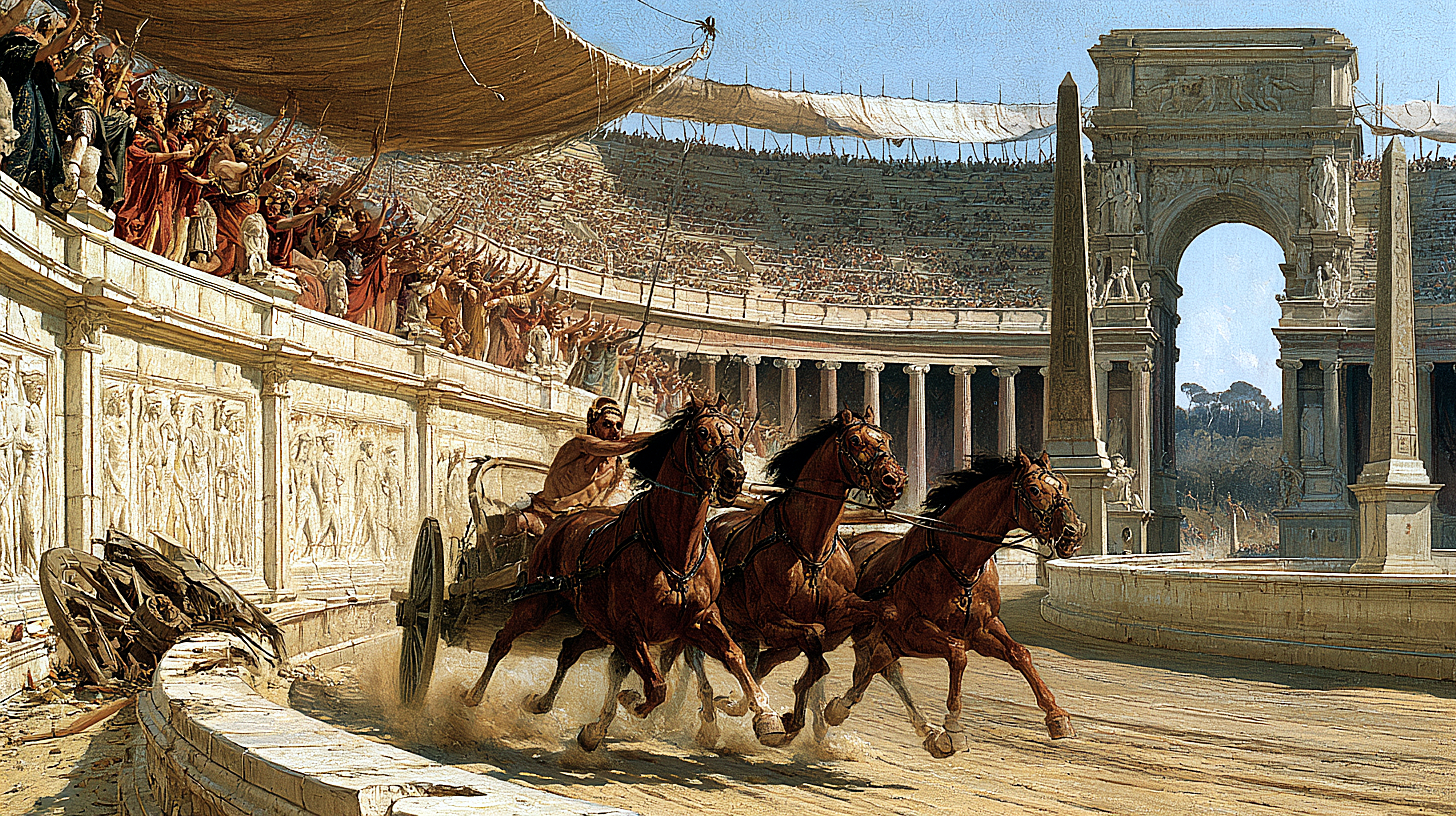
Chariot racing was not a gentle pastime. Twelve chariots — each drawn by four horses — thundered seven laps around the spina, the long central barrier, fighting for position at speeds modern riders still find reckless. Wrecks were the entertainment. Crashes (naufragia, 'shipwrecks') could take out half the field, and a charioteer's death was part of the show. The best of them became the richest sportsmen in history: the great driver Gaius Appuleius Diocles won over 1,400 races in his 24-year career and retired a multimillionaire.
The four factions — Reds, Whites, Greens, Blues
Rome's racing teams were businesses with colour-coded uniforms: the Reds, Whites, Greens and Blues. Over time the Greens and Blues became the superclubs of antiquity — their support cut across every social line, from slaves to senators to emperors. Caligula, one of racing's most devoted fans, was said to favour the Greens so openly that he dined in their stables. Rivalry could turn the streets violent; the Blues and Greens would one day nearly tear Constantinople apart.
Racing for freedom
Many charioteers were slaves who raced for their owners — and for their own future. Victory brought prize money, fame and, eventually, the means to buy freedom. In the circus, a slave could become a celebrity worth more than senators, an idea so thrilling it scandalised and delighted Rome in equal measure.
Where Rome began — and where it played
The valley held the city's oldest memories. It was here, according to legend, that Romulus staged the Rape of the Sabine Women — inviting the neighbouring Sabines to a festival of games and abducting their daughters to found Rome's population. From a legend of the city's first moments to the last chariot race in 549 AD, the Circus was the stage on which Rome rehearsed its own story.
The vanished wonders
The circus's greatest marvels have long since left the valley. Julius Caesar installed an Egyptian obelisk on the spina; Augustus brought a second, grander one from Heliopolis. Both were toppled in the Middle Ages — and in 1587 and 1589 the popes had them re-erected: one now crowns Piazza del Popolo, the other stands beside the Basilica of St John Lateran. Stand in the empty track today and you see the ghosts of a city's largest monument.
“The Roman people… anxiously hopes for just two things: bread and circuses.”
“…the Circus Maximus, which holds two hundred and fifty thousand…”
Legends & side stories
The Rape of the Sabine Women
Rome's founding myth places the first 'games' here: Romulus invited the Sabines to the festival of Consualia, then seized their daughters — the act that gave Rome its first population. The valley has been the city's gathering place ever since.
An emperor who raced
The emperor Nero could not resist the arena. He insisted on driving his own chariot in the races — and was famously awarded the crown even after falling from his chariot and failing to finish.
What to see today
01The giant oval of the track
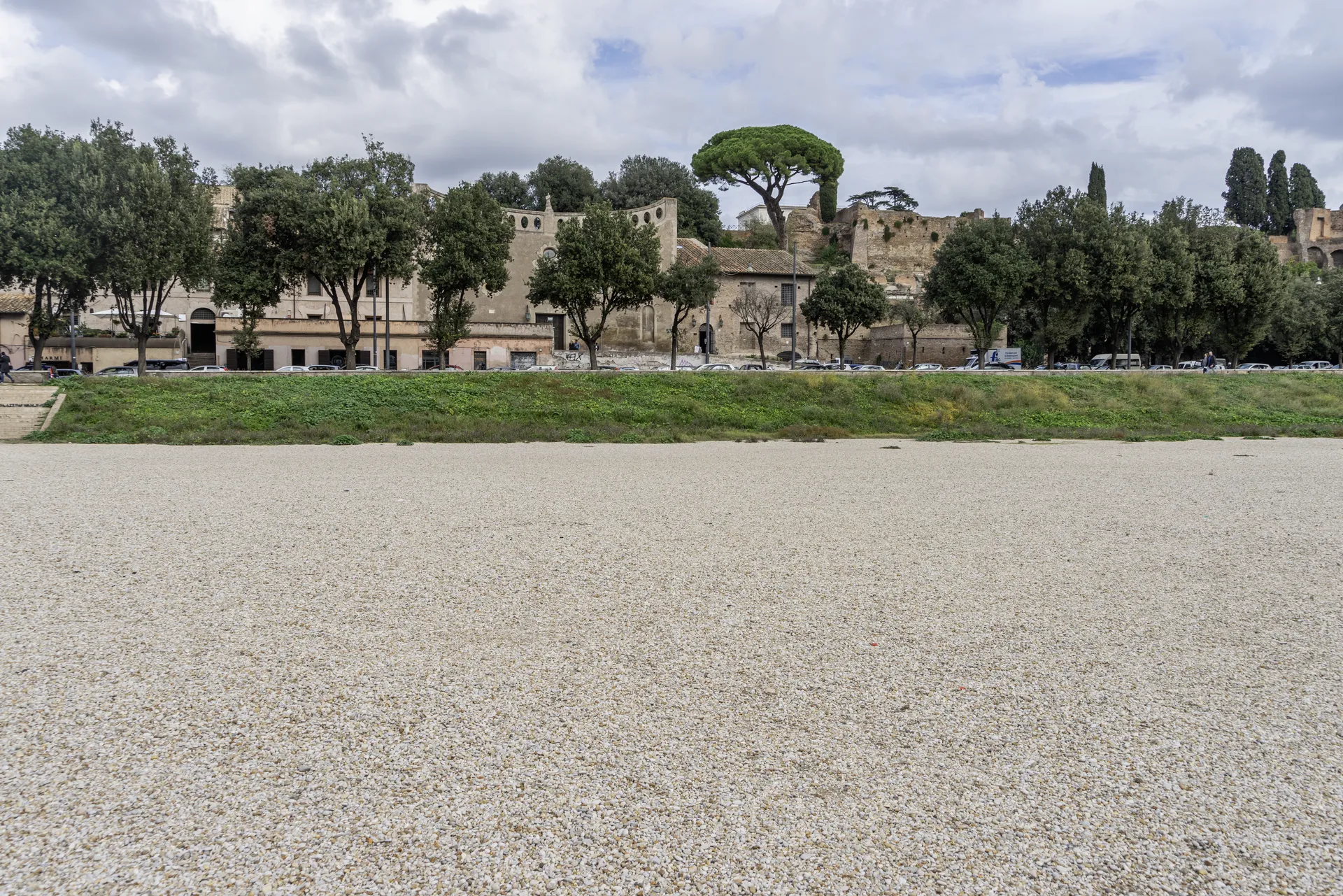
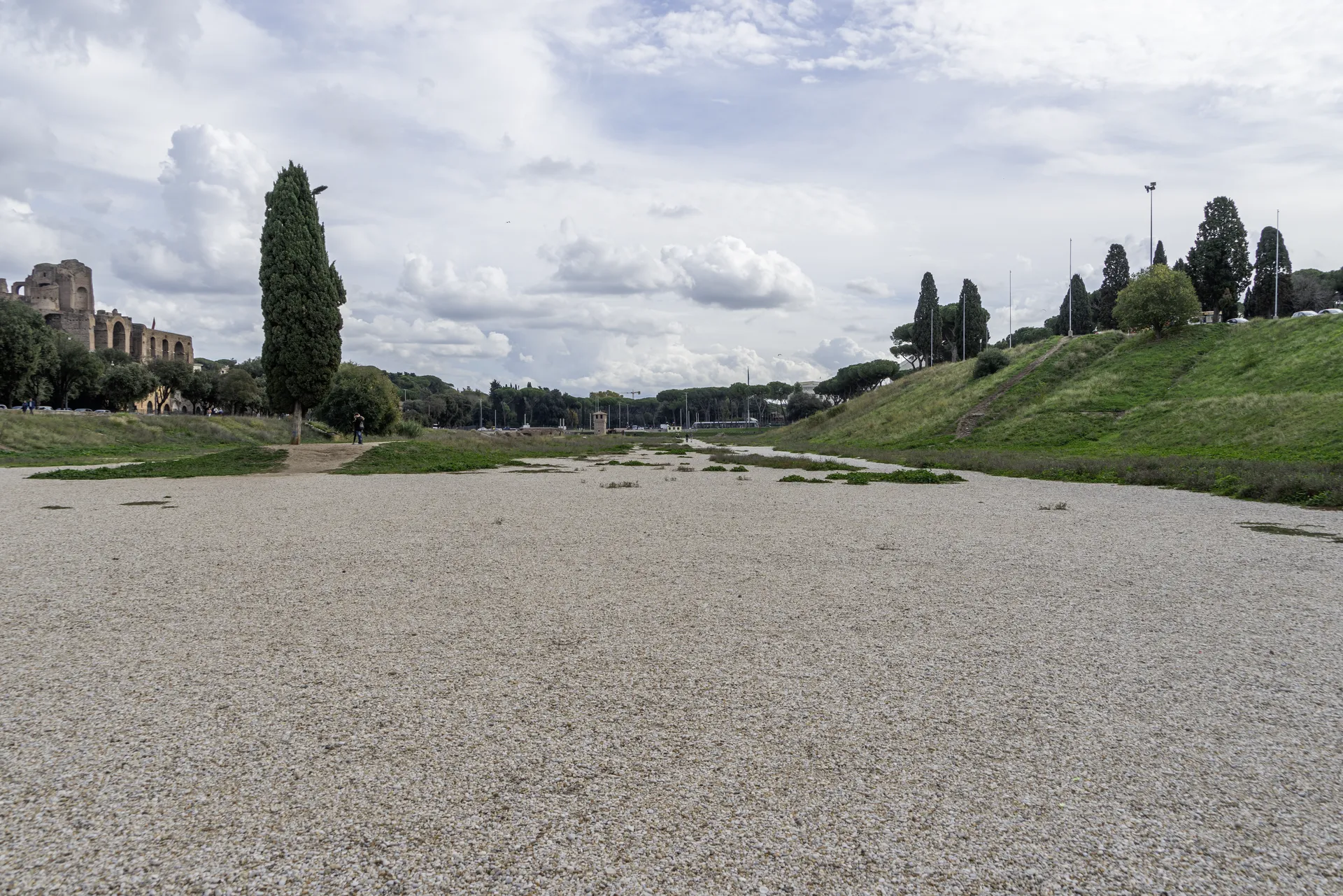
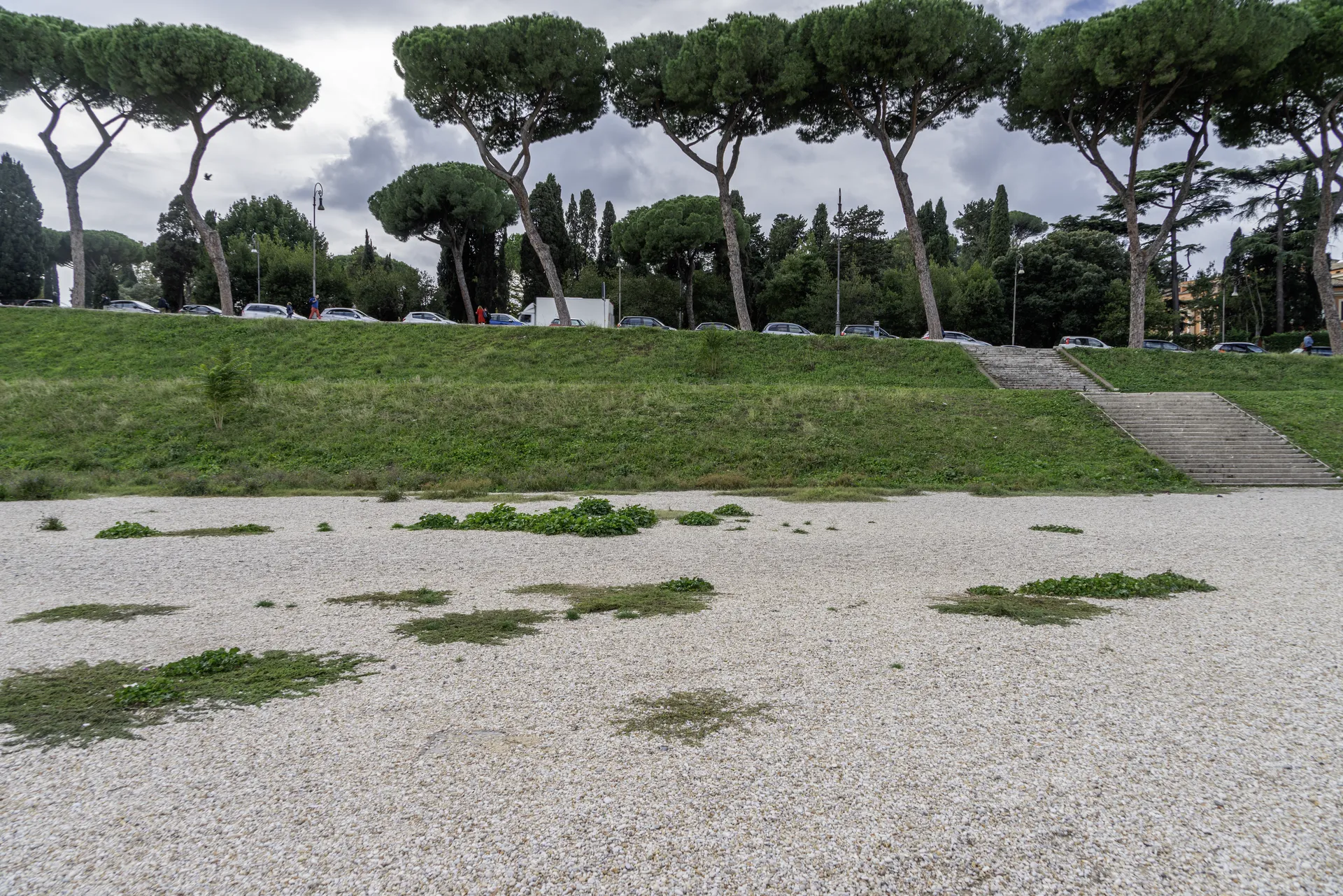
The most moving thing here is absence: walk the enormous grassy oval that still traces the 621-metre course. Stand at the centre and the valley's sheer scale — far larger than the Colosseum — does the talking.
02The surviving arcades
At the south-east curve, brick arcades of the ancient stands survive to full height — a rare glimpse of how the great tiers of seats climbed the hillside, tier after tier, into the Roman sky.
03The excavated stands
A small excavated area reveals the foundations of the seating (the cavea), with an elevated walkway that lets you look down into the buried structure and a small exhibition of finds.
04The view from the Palatine
Climb the Palatine Hill to the ancient imperial palaces above — the emperors' box was here. From the Farnese Gardens the whole arena spreads beneath you: the finest sightline in Rome.
05Hunting the obelisks
The spina's famous obelisks are gone, but their story is a treasure hunt across Rome: the Lateran obelisk (4th century AD, largest in the world) and the Flaminian obelisk now standing in Piazza del Popolo.
Visitor information
tips
Combine with Palatine Hill (entrance on Via di San Gregorio) and the Roman Forum — the three form one logical half-day circuit. Bring water in summer: the open valley has almost no shade.
hours
Public park: dawn to dusk. The excavated walkway/exhibition has separate (limited) hours — check on arrival.
tickets
The main site is free. A small ticket covers the elevated walkway over the excavated stands and the exhibition.
best time
Sunset is magical: golden light floods the valley and the Palatine catches the last sun. Spring and autumn are the most comfortable seasons.
accessibility
The park is flat and fully accessible by wheelchair. The excavated walkway is a short, gentle climb.
getting there
Metro B — Circo Massimo station (at the track's curve). Buses 81, 175, 715 stop at Circo Massimo / Porta Capena. A 10-minute walk from the Colosseum and Roman Forum.
family friendly
Excellent for children — acres of open grass to run on, and the chariot-racing story (and the Ben-Hur connection) makes history feel like a film set.